
 Deutsch
 Ελληνικά







PREPARING A COFFEE WITH A TRADITIONAL ESPRESSO MACHINE
Tips on all the secrets of making coffee with a traditional espresso machine for baristas
For ideal extraction

THE CORRECT GRIND OF COFFEE
What is the correct grind for my coffee?
The degree of grinding of the coffee plays a very important role in extraction, as the grind also highlights the aroma of the coffee. How finely you should grind the espresso beans depends mainly on the preparation method you will follow. The decisive factor is the extraction time, that is, the time during which the coffee comes into contact with the water during preparation.
For some specialty coffees, such as espresso, the extraction should not take long. In this case, the grind should be fine, so that when the water passes through the coffee, it has more surface area to develop the aromas more quickly. With other coffee preparation methods, the extraction time is longer. In such cases, a coarser grind is required.
Experience has shown the following rules:
-
- Finely ground coffee is intended for shorter extraction times.
- Coarser ground coffee is suitable for longer extraction times.
 |
|
 |
How does grinding affect the taste of coffee?
If you do not use the correct grind for the respective coffee specialty, then, yes, it can affect the taste of coffee. If your coffee tastes watery or a bit sour, it may be because the grinder setting is too coarse. If the coffee is too strong or has a bitter taste, then the grinder is set to grind too fine.
What is under-extraction and over-extraction?
An incorrect setting in the grind can result in the hot water not being able to “pull” the aromas of the coffee. This is called under-extraction or over-extraction.
Under-extraction
In the case of under-extraction, not enough ingredients and aromas are extracted from the ground coffee. Thus, the coffee is very light in color, has a flat and very dilute taste.
Overextraction
In overextraction, the water, in addition to the aroma and taste of the coffee, also “draws” bitter substances, such as tannin. These can overpower the aroma and taste of the coffee, and even lead to stomach upset in some cases. In this case, the coffee takes on an extremely dark color and has an excessively intense and unpleasantly bitter taste.
Can I tell the grind of a coffee by its crema?
In espresso, you can tell the degree of grind by the crema. Ideally, this can be done even several minutes after it is prepared. A good crema has a medium brown color (neither too light nor too dark) and if you stir the coffee with a spoon it will not leave a void. If the grind is too fine, the crema will be dark in color.

Underextraction

During underextraction, a thin, light-colored layer of cream forms in the coffee that quickly dissolves

Overextraction

During overextraction, the espresso has a thick layer of dark crema.
What is the appropriate grind for each coffee brewing method?
If you want to prepare an espresso with a traditional shutter machine, you need the best possible result from the ground coffee. In this type of machine, the extraction should last from 25 to 30 seconds. For this reason, an extremely fine grind is required, so that the water can quickly “pull out” all the aromas of the coffee.
To make filter coffee, the coffee should be medium ground. This is due to the longer extraction time. Also, if the coffee is ground too finely it can clog the filter. The same goes for using a Chemex. The coffee should also be ground medium. If you choose to make your coffee with a French Press, then the coffee should be ground at a smaller setting, meaning it should be coarser.
The proper grinding of coffee beans in an automatic machine
If you want to make an espresso with a fully automatic coffee machine, you should set the grinder to grind finely because in this type of automatic coffee machine, the contact time of the coffee with the water is short. The same applies to all other drinks that are based on espresso. This means that for a cappuccino or latte macchiato, the grinding should be fine.
However, if you choose to make a Café Crème, or Americano, with a fully automatic coffee machine, the coffee should be much coarser than when making an espresso. The preparation time for a Café Crème is the same as the preparation time for an espresso. The difference lies in the amount of water that passes through the coffee. Thus, it is important that the coffee grind is coarser when we want to make a Café Crème than when we want to make an espresso, but also a little finer than when we want to make a filter coffee with a French Press.
How coffee roasting affects the degree of grinding
In addition to the preparation method, the type of coffee beans and especially the roasting plays an equally important role in the correct adjustment of the grinding of coffee beans:
- Lightly roasted coffee beans are harder and require a finer grind.
- If the beans are darker in color, and therefore more roasted, you should adjust a finer grind. The “dark roasted” varieties, as these varieties are called, are more fragile and therefore release their aromas more quickly.
OUR FAVORITE COFFEE BEANS
How to grind your coffee
At SOLINO COFFEE SERVICE you can find a wide variety of coffee beans and ground coffee. If you choose to buy coffee beans, you should grind it yourself before brewing it. This way, you can only determine the final taste you want your coffee to have, such as making it more intense. Since the aroma remains in the beans for longer than in ground coffee. If you grind the beans, fresh, just before preparing the coffee, you will be able to taste the most delicious coffee.
To grind the beans, you should use a coffee grinder. You will find manual and electronic grinders on the market. If you have a manual grinder, you will have to turn the lever yourself to grind the coffee. This process is much easier with an electric grinder, as you only have to press a button to start grinding.
Alternatively, you can use a fully automatic coffee machine. These machines have a built-in grinder, so you do not need a separate machine. Most automatic coffee machines also have a grinder adjustment function to grind perfectly for each individual coffee specialty.
More tips for grinding coffee beans
Whether the coffee grind setting should be finer or coarser is also a matter of personal preference. To enjoy the ideal coffee exactly the way you like it, you will have to experiment a little. Use your preferred coffee variety and do some tests with the extraction time and the degree of grinding. Below we have put together some more tips that can help you find the right grind for you:
- When doing your tests, take your own desires and needs into account. If you prefer a milder taste in your coffee, then set the grinder to grind coarser. If you want a heavier coffee, grind the beans finer.
- Do not make these changes in very large steps. To find the degree of grinding that suits you, proceed by gradually changing the grinding in small stages.
- Do not forget that the grind is not the only factor that affects the taste of coffee. If your coffee does not have the ideal taste, it may be because the temperature during its preparation is higher or because the coffee beans were not stored properly or the type of coffee has high acidity.
- Always grind the coffee beans shortly before making your coffee. Ground coffee loses its aroma and flavor much faster than coffee beans.
- Depending on the coffee grinder you have, you can adjust the grinding “micrometrically”, i.e. uniformly or at predetermined levels.
What kind of knives should the grinder I choose have?
Do you want to grind your own espresso beans and are looking for a good grinder for your home or office? Another thing you should pay attention to is the knives of the coffee grinder. Usually, grinders have a flat blade or conical knives:
- Conical knives: Grinders with conical knives are often quieter, more stable and more durable. Another advantage is their lower heat generation which allows the coffee beans to be ground more gently.
- Flat blade: Coffee grinders that feature a one-piece flat blade often operate at higher speeds, generating more heat.
Which coffee machine is better?

COMPARISON OF TRADITIONAL ESPRESSO MACHINE WITH AUTOMATIC COFFEE MACHINE
The Coffee Machine as a guarantor of success - in gastronomy and business
Tasty coffee specialties are one of the most important assets of a company in the catering industry. Their consistently high quality is decisive for the satisfaction of visitors and the success of the company. The quality of coffee is of course no less important in other companies, both for the staff and for the good hospitality of visitors. Choosing the ideal coffee machine, tailored precisely to the needs of each company, is therefore of particular importance.
But be careful:
In places with high coffee consumption, capsule or pad machines are not recommended. Traditional espresso machines with a shutter and fully automatic coffee machines are much superior, initially in terms of the quality of fresh coffee, its cost, and the cost of care and maintenance.
Automatic coffee machines VS. traditional espresso machines with a shutter
Whether it is a mass catering business, or a company or even a store: Before choosing an automatic coffee machine or a traditional espresso machine, some study of the needs of each space should be done. To find the best individual solution for you, you should first ask yourself the following questions:
- How much coffee do you drink per day?
- What role does the appearance of the machine play?
- How complicated or simple should the operation and maintenance of the machine be?

THE TRADITIONAL ESPRESSO MACHINE WITH A SHUTTER These two types of coffee machines differ in both their use and their results. The classic espresso machine operates manually, step by step. Initially, the ground coffee is placed in the single or double basket of the shutter, pressed with the tamper until it has a uniform surface and then hot water and steam are passed through the machine at high pressure. With these machines one can make very tasty high-quality coffees, but due to their relatively complex operation they require trained barista staff. |

THE FULLY AUTOMATIC COFFEE MACHINE The "super-automatic" machines, on the other hand, are fast to operate, user-friendly, as with the push of a button or a touch on the touch screen – depending on the machine – they guarantee consistent coffee quality at barista level. In addition to all specialty coffees, a fully automatic coffee machine can also provide hot water at the ideal temperature to make tea, cocoa and of course hot / cold milk and milk foam. Most automatic coffee machines also have automatic maintenance and cleaning programs. |
THE ADVANTAGES OF BOTH TYPES OF COFFEE MACHINES IN COMPARISON
|
ADVANTAGES OF THE TRADITIONAL ESPRESSO MACHINE
|
ADVANTAGES OF AN AUTOMATIC COFFEE MACHINE
|
Coffee Machine Search
With just a few clicks you will receive a personalized quote for an automatic coffee machine. All you need to do is fill in some information about your company's coffee consumption and your preferences. We will respond by sending you a quote for the ideal coffee machine for you.

PREPARING A COFFEE WITH MILK
Delicious coffee specialties with milk that you will love
Milk is simply part of coffee. Whether as a small amount in filter coffee or as a key ingredient in latte macchiato: Milk is in perfect harmony with the taste of coffee, while softening its bitter substances, giving it a pleasantly sweet taste. It is therefore not surprising that this combination is particularly loved all over the world. That is why there are so many coffee specialties that combine milk in different forms so wonderfully with the “black gold” (i.e. coffee). But what is the difference between milk coffee, Café con leche and Café au Lait? Here we will present you with interesting information about the most popular coffee specialties and what you should pay attention to when preparing them.
 |
 |
 |
DELICIOUS CREATIONS FROM ALL WORLD
MILK COFFEE OR CAFÉ AU LAIT
Milk coffee is a classic choice that is easy to drink thanks to its high milk content. It is made from equal parts coffee and milk, which are poured into the cup at the same time. Sometimes one can also add milk foam. However, it is important to warm the milk for a while first, so that you have a good temperature in the final drink. The milk fat content of 3.5 or 3.8% is ideal for creamy foam and a fuller flavor. Now there are alternative milk options for vegans or those who are lactose intolerant, which are ideal for making perfect milk foam.
The preparation of milk coffee is exactly the same as in France, except that there this drink is called café au lait and is served in a cup without a handle – ideal for dipping pastries such as baguettes or croissants.
CAFÉ CON LECHE
Anyone who thinks that Café con leche is simply the Spanish name for milk coffee is mistaken. Contrary to German and French custom, this drink is not prepared with filter coffee, but with a double espresso. Usually, the espresso used in Spain is slightly darker, i.e. more roasted than ours. As in the classic milk coffee, the amount of milk in the cup is the same, however, the milk is often served in a separate jug.
CAFÉ LATTE
We remain in the South and espresso. In Italy, another popular creation is the café late, which is prepared with a double espresso and a delicious layer of milk foam on top. For milk foam, the milk is heated to 60 – 65°C and frothed, either with the help of an electric milk frother or with the nozzle of the coffee maker. A medium-sized cup is used for serving and often a little cocoa powder is added on top.
LATTE MACCHIATO
A very special coffee-based drink, which actually contains more milk than coffee, is the latte macchiato, which consists of 3 layers: hot milk at the bottom, espresso in the middle and plenty of milk foam on top. The proportions are approximately 200ml milk and 30ml espresso. It is often served with syrup, which enhances its taste.
CAPPUCCINO
Espresso is also the basis for the popular and much-loved cappuccino. The milk is turned into a thin, tasty milk foam and poured into the coffee in a specific way. Both ingredients flow into each other and a wonderful cream forms on top. Cappuccino is served in a wide, thick-walled cup, made of clay or porcelain. Typically, baristas perfect the cappuccino with a latte art pattern, such as a heart, leaf or tulip.
OUR SUGGESTIONS FOR COFFEE WITH MILK
What can we offer as alternatives?

MINOR FIGURES OAT MILK
THE MODERN OAT MILK DRINK: PLANT-BASED, HYGIENIC AND SUPER-DELIVERY
Oat milk is on the rise. It is increasingly found in private homes and restaurants - and for good reason! This alternative to cow's milk is not just for those who want to diversify their diet. It is particularly popular with allergy sufferers and those with food intolerances. Health-conscious consumers appreciate the low fat and high fiber content of this sweet and creamy oat beverage. Depending on your preference, you can drink oat milk plain or use it in muesli, smoothies and a variety of recipes. Whether using classic or more unusual recipes, chefs and baristas praise it. Speaking of coffee: Special versions of this vegan alternative in restaurants, thanks to the added fats and proteins, can be transformed into a beautifully frothy latte, perfect for creating designs such as swans, hearts or flowers. Lovers of cappuccino, latte macchiato and similar drinks also enjoy the versatile plant-based milk.
 |
 |
 |
ALTERNATIVE AND VERSATILE
Without animal ingredients, oat milk is also appreciated by vegans. Even allergy sufferers can enjoy this Swedish invention. Oat milk contains neither lactose nor milk protein or soy ingredients. This makes it an ideal milk substitute for those with lactose intolerance, milk protein intolerance or soy allergy. Those with a nut allergy, who should avoid nut-based milk alternatives, will also find oat milk a good choice. Only those with celiac disease should be careful with oats, as it contains gluten ingredients - although not gluten itself. Therefore, a tolerance test should be carried out beforehand. Otherwise, oat milk is ideal for anyone who appreciates its slightly sweet, creamy taste.
SIMPLE GOOD – AND FOR THE ENVIRONMENT
In addition to health aspects, ecological criteria often play a role in the consumption of plant-based products. It is known that the production of cow's milk harms the environment through greenhouse gas emissions, leading more and more consumers to choose alternatives. Other factors, such as animal feed or supplementary concentrated feed, also burden the environment through cultivation and water consumption, as well as affecting the health of the animals. Oat milk stands out with a positive environmental footprint, even compared to other plant-based milks. In addition, oats require relatively few resources to grow and, unlike soybeans, do not need to be imported from far away. Oats can be grown in Central Europe, offering two key advantages: a readily available water supply through rainfall and the ability to shorten transport routes. In addition, oat milk is mainly produced from organically grown oat grains.
All these aspects make traditional milk seem almost a bit old-fashioned. So it's worth taking a look at the milk alternatives on the shelves and finding your favorite. Anyone who starts with oat milk will surely soon find it a must-have in their fridge – and in their coffee. Try it today!
OUR PRODUCT RECOMMENDATIONS FOR YOU
Coffee Art

HOW TO MAKE LATTE ART: HEART, LEAF, TULIP
WHAT IS LATTE ART?
Have you heard the term before, but aren't sure what it means? After all, it's quite simple: you pour milk foam into your coffee and arrange it in a row to create images or designs. The basic requirements for this coffee art are perfect milk foam and a lot of practice. Unlike a simple cappuccino or latte macchiato, latte art requires a very fine-pored milk foam, also known as microfoam.
WHAT DO YOU NEED FOR LATTE ART?
- A milk jug with a pointed spout
- Perfectly frothy, uniform milk foam
- Optional tools like a latte art pen or food coloring
- An incredible amount of practice, time, and patience
THREE LATTE TECHNIQUES
Latte art can generally be divided into three different techniques:
- the classic pouring technique (pairing)
- 3D modeling of shapes
- drawing using tools such as latte art pens (engraving) or similar.
Last but not least, there are countless hybrid forms of these techniques.
In this article, we will focus specifically on the original form of latte art - pairing.

One of the most famous latte art designs is the heart. To create it, pour milk under the cream until the cup is half full. Then, lower the jug and start pouring more milk more quickly, creating a frothy drop on the surface. The design works best if you start pouring a little below the center. To complete the heart, quickly draw a line through the foam drop.
A so-called leaf pattern is created by pouring the milk foam from left to right, dragging it towards the rim of the cup that is being filled with espresso, slightly offset from the center. This creates a zigzag pattern. Once this pattern reaches the rim of the cup, complete the leaf with a final movement perpendicular to the sweeping motion. This creates the "stem" of the leaf. The challenge here lies in choosing the right flow angle. The steeper the angle, the more white foam will be visible on the surface of the espresso.

The tulip shape poses the biggest challenge for most baristas. Filling this design requires repeatedly putting down the milk jug, which requires considerable skill. First, the milk is poured so that it flows only under the cream and is not visible on the surface. This is done until the cup is half full. Then, the first dot is placed slightly below the center, so that the milk foam penetrates the cream. This is followed by a second, third, fourth and possibly a fifth dot along a line. Traditionally, there are three dots. It is important that the last dot is poured in a heart shape and the reverse movement is through the entire line of dots.
6 TIPS FOR LATTE ART
1- Use a round, bulbous cup, if possible, to have a large surface area for latte art.
2- Consistency is key. Therefore, swirl the freshly frothed foam in a circular motion to make the air and milk emulsion even more homogeneous and fine-pored. This allows you to extend the rolling phase and prevents the milk and foam from separating. Once this happens, latte art is no longer possible.
3- Do not pour the milk too slowly, otherwise only the milk will flow into the coffee and the foam will remain in the jug. However, if you pour too quickly, the milk will not be suitable for drawing. Therefore, always pour evenly!
4- The angle of the milk flow also controls whether the milk foam is visible on the surface of the coffee or flows under the cream. The steeper the angle, the more visible the foam will be.
5- For beginners, it is easier to start latte art with a 0.3 liter jug and a pointed spout, as you can work more directly and precisely on the surface. However, making milk foam in advance is easier in larger jugs (0.75 L or 1 L) because you have more time for the foaming process. The frothed milk can then simply be poured into the smaller jug.
6- Practice tip: Mix half cold water and half milk, then froth it and practice spreading it. This saves resources!
TIPS FOR ADVANCED STUDENTS
Depending on your skill and creativity, these basic shapes can be combined in any way you like or enriched with colored milk foam. If you have already mastered the classic latte art shapes, you can try, for example, a slightly more challenging combination of a heart and a leaf. When combined correctly, these two patterns create a swan.
CONCLUSION ON LATTE ART
The art of decorating with coffee seems simple enough at first glance: pour in frothed milk and you're done. However, anyone who tries it quickly realizes how complex the process is. It takes a lot of practice to create designs from frothed milk. But once you master the basics, you have countless opportunities to unleash your creativity and experiment with colors and shapes. Time, patience, concentration and a little talent are the keys to latte art success.
What is better for your coffee?

COMPARISON: POWDERED MILK VS. FRESH MILK
COMPARISON FRESH MILK OR POWDERED MILK? – PROS AND CONS
How is a cappuccino or latte macchiato professionally prepared? Milk is the key ingredient for creating these specialty coffees. In addition to the usual use of fresh milk, powdered milk is also a popular alternative for offices and restaurants. With the creamy and firm milk foam you can create attractive specialty coffees that impress both visually and tastewise.
- Milk powder comes in a wide variety
- Milk powder is made from whole and skimmed milk
- It is also available in lactose-free form
FRESH MILK VS. POWDERED MILK – WHICH PRODUCT SUITS YOU BEST?
Made from milk powder, enriched with proteins and fats, one kilogram of powdered milk replaces approximately 10 liters of fresh milk. This ratio is very positive both in terms of storage and shelf life. Although fresh milk has a higher nutritional value, powdered milk excels in ease of handling and hygiene.
- Good result in frothed milk, lasts longer
- Space saving: 1 kilo is equivalent to 10 liters of fresh milk
- Long lasting, even at room temperature
- Convenient hygiene and easy cleaning
- Quick preparation of all specialty coffees
- Easy dosage
- No nutrients
- Preservatives such as: stabilizers, release agents and emulsifiers
- High nutritional content
- No additives
- No addition sugar
- Nice aroma in coffee
- Natural, delicious taste
- Short shelf life
- The automatic coffee machine must be cleaned after use - Risk of bacteria / mold
THE PRODUCTS WE RECOMMEND
8 Steps to Perfect Milk Froth

THE 8 STEPS TO A PERFECT MILK FROTH
HINTS AND TIPS FOR A DELICIOUS, CREAMY RESULT – AIRY AND LIGHT BARISTA-LEVEL MILK FOAM
Cappuccino, latte macchiato, hot chocolate or chai latte: What would all these wonderful drinks be without milk? The milk froth should be firm, creamy and silky. The final result is not only about the taste but also the texture. Its appearance is also important, as it is at the top of the most popular drinks. To achieve a perfect milk froth, you need the right equipment, a lot of practice, but above all: the right instructions!
So we present to you the most important steps for the perfect milk froth! If you follow some important rules, then you don't need a lot of equipment. Only the following 3 accessories are recommended: Ideally, you will need a stainless steel milk jug (mota). Due to the good conductivity, you will easily achieve the ideal temperature. If you prefer a particularly thin foam, you may need a rubber mat. If you are just starting your first attempts in the world of barista, you will also need a thermometer, as temperature plays a very important role in the quality of the result. We will discuss this more later.


Almond milk

MILK AND SUBSTITUTES: ALMOND MILK

Coffee lovers usually enjoy drinking the popular coffee specialties with milk and milk foam. A wonderful layer of delicious silky milk foam gives cappuccino or latte lovers the greatest pleasure. However, plant-based milk alternatives, such as almond milk, are gaining more and more ground in the preferences of coffee lovers. Plant-based milk can be enjoyed by vegans or people with lactose intolerance without remorse or discomfort. Among the many options, almond milk is one of the most popular, as its velvety taste is liked by many coffee lovers. What does milk made from roasted almonds offer? What about the nutrients, the ecological balance and the quality of the foamed milk? Questions that we dealt with in more detail at Solino Coffee Service and present to you our little research.
HOW IS ALMOND MILK MADE?
Roasted almonds, water and a filter or cloth. These are all you need to make your own almond milk. First, you soak the almonds in water, then they become a pulp and pass them through a sieve. The liquid that remains is almond milk – in its unsweetened version! Some producers add other ingredients, such as lecithin, salt or sugar. Others even supplement with vitamins.
ALMOND MILK AND ITS FLAVOR
The roasted aroma and natural sweetness of almonds combine harmoniously to create a particularly creamy, smooth result. For many coffee fans, this is the closest thing to the taste of cow's milk. Almond milk has a sweet taste, even without the addition of sugar. Also, its aroma is not so strong that it overwhelms or negatively affects the aroma and taste of coffee. On the contrary, any milk substitute goes well with coffee.
COMPARISON: ALMOND MILK, COW MILK AND OTHER ALTERNATIVES
In terms of nutritional value, almond milk cannot be rated on equal terms because different manufacturers use different amounts of almonds in their drink. The higher the almond content, the more fat and calories the drink contains. Sometimes the almond content is only 7%. This means a low-fat, plant-based alternative milk with about 13 calories per 100 ml. At the same time, other products have up to 36 calories per 100 ml because they use more almonds. To make a comparison: low-fat cow's milk has around 46 calories per 100 ml, while full-fat milk has 65 calories per 100 ml. Regarding the natural sugar content, cow's milk and almond milk do not differ that much. The natural sugar is around 0.5 g per 100 ml for both products. This applies if the almond content does not exceed 10% during production. Some products contain 25 grams of sugar per 100 ml of plant-based milk. When it comes to fiber and vitamins, experts' opinions differ. Almonds are rich in vitamin E. However, it is not certain whether the same applies to almond milk. Some nutritionists believe that the final drink does not contain any vital substances. This again varies from product to product depending on the amount of almonds used. Almond milk, however, contains more fiber than cow's milk. From an ecological point of view, however, almond milk is not in a better position than cow's milk, as its production requires a much larger amount of water. For 1 liter of cow's milk, more than 200 liters of water are already required, while for almond milk this number is 17 times higher. Almonds are often grown in arid areas, which are extensively irrigated. Therefore, Solino Coffee Service suggests alternatives to almond milk, such as oat milk for example, for consumers with particular sensitivity to the environment. As always, of course, all of these conclusions depend on the brand and the individual product.
ALMOND MILK PROS AND CONS AT A GLANCE
ADVANTAGES
- Almond milk tastes great.
- Some almond milk products are diet-friendly.
- Almond milk can make nice frothed milk.
- Almond milk does not have a strong or annoying taste.
DISADVANTAGES
- Some products are high in natural sugar, but also in calories.
- The ecological balance for almond milk has not been completely clarified.
MISCELLANEOUS QUESTIONS ABOUT ALMOND MILK PRODUCTS
Those who pay attention to their health and fitness have certainly heard of almond milk. We have gathered some questions about the product that has become so popular:
1- Is almond milk good for the skin?
This question is probably related to its vitamin E content. The “beauty” vitamin and antioxidants are abundant in almonds. Some almond milks also seem to have a lot of vitamin E. Its fiber content can also have a positive effect on the health and appearance of the skin.
2- Is almond milk suitable for dieting?
It depends on the product. As we mentioned, some almond drinks are low in calories and contain no natural sugar at all. Others, however, have a higher natural sugar content, which makes them unsuitable during a diet period. Furthermore, some manufacturers add extra sugar.
3- Is almond milk a fitness product?
Here again, we will answer that it depends on the brand of product. Some are suitable. To benefit from all the potential health benefits of almond milk, you should make a careful choice among the brands on the market.
4- Almond milk and milk foam – what does the barista say?
In any case, one should know very well the basic principles that combine milk and coffee. There are many tricks and tips to turn a simple coffee into an enjoyable experience with the help of different types of milk. For a good milk foam, the main role is played by the fat content and temperature. Many baristas state that almond milk can be made into an amazing milk foam, which they now use daily. Almond milk can make the same velvety froth as cow's milk
ALMOND MILK AND AUTOMATIC COFFEE MACHINES – WHAT YOU SHOULD KNOW?
Do you have a fully automatic coffee machine? And have you ever wondered if you can use alternatives, such as almond milk? From a purely technical point of view, there is nothing to indicate that you cannot use alternatives to make milk froth. Typical ingredients such as fat content, sugar content and possibly protein content are similar in all dairy products. Even if the manufacturer of the coffee machine does not provide any information about the use of alternative milks, you can use them regularly in your machine. The performance may not be immediately particularly appealing. You should experiment with different brands of almond milk. As we mentioned before, the fat content of the milk often determines the quality of the froth. Sometimes the temperature may not be right and this will result in the milk not spreading well. In that case, you should try other brands at different temperatures.

COFFEE IN THE OFFICE
Coffee maker, coffee, cups and everything else related to coffee in the office
The right cup for every drink

CUPS AND MUGS
Cups, saucers, mugs and glasses in the professional environment – everything must meet specific specifications: They must be easy to care for, stable and durable. After all, they pass through many hands every day, sometimes in the dishwasher, sometimes in the refrigerator or even in the microwave.
And despite all this daily hassle, they should look new when we want to offer a coffee or a tea. How do you choose the right cups to match your colleagues, your cabinets, and each other?
Modern offices must now be able to do a lot, as they become increasingly functional, spacious, and representative. However, if you look closely, you will realize that common areas and kitchens are often neglected when it comes to planning. And it is not surprising, especially when you see how small spaces are crammed with coffee makers, microwave ovens, and a table or bench, if there is any room for that at all. In short: Modern workplace kitchens suffer from a lack of space, comfort and smart solutions. This needs to change!
 |
 |
 |
Kitchen Cabinet Organization
When planning the purchase of new kitchen equipment, you should carefully consider how you will ensure functionality, organization and structure. Some tips: To fit as much crockery as possible in a limited space, you should sort the cups, mugs, saucers, etc. into stacks. Special designs and recesses allow the cups and mugs to be stacked stably and not “tilt” with the risk of falling as soon as the cabinet is opened. However, many manufacturers offer practical and elegant tableware.
DISHWASHER: MODERN DESIGNS
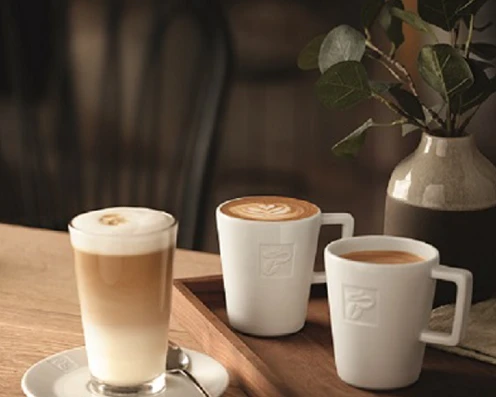
The latest trend in porcelain tableware is flat plates and cups without handles. This may not be to everyone's taste, but it saves space in any case. As for the plates, they are multifunctional and can be used for different purposes. The advantage? You have fewer tableware items in the cupboard, but you are ready for any occasion, giving an elegant and functional answer to the chaos of the cupboards. Flat saucers can also be used as “lids” for cups or even as coasters.
COFFEE CUPS: ONE FOR ALL
Some people prefer coffee, while others prefer a cup of tea or hot chocolate. Others prefer their muesli in the morning. The tastes of colleagues are different – and so are the requirements for the equipment of a kitchen. If you try to satisfy every wish separately, it will take a lot of time, as there is a suitable cup and saucer for each drink. In this case, universal cups and plates will free your hands, as they are not only used for one type of drink, but also for desserts, cereals, salads, etc.
CLEANING AND DRYING
One of the most tiring and time-consuming tasks in the office is cleaning the kitchen and checking that all the plates and glasses are ready for tomorrow. Whoever has taken on this responsibility literally has their hands full. A few simple design tricks can make managing a large amount of plates and cups much easier. For example, make sure that mugs and cups do not have that characteristic curve at their base, in which a small amount of water always collects, resulting in them drying so slowly. Your colleagues will thank you.
An alternative option: Hot chocolate or tea with an automatic coffee machine

FULLY AUTOMATIC COCOA AND TEA MACHINE: THE PERFECT SOLUTION FOR NON-COFFEE DRINKERS
AN ALTERNATIVE SOLUTION: MAKE A CHOCOLATE OR TEA DRINK WITH AN AUTOMATIC COFFEE MACHINE

In many offices, the coffee break with colleagues is an integral part of everyday life. Both at work, but also at business meetings, conferences or seminars, many people drink a coffee during short breaks. But not everyone is a coffee lover! But coffee drinkers would also happily choose another beverage for a change. For these cases, an automatic coffee machine that can also make tea and chocolate drinks is the ideal choice.
WHAT CAN AN AUTOMATIC COFFEE MACHINE WITH TEA AND CHOCOLATE DRINK FUNCTION OFFER ME?
If both coffee and tea are consumed happily in your office, it is worth buying a coffee machine that also offers hot water for tea. This means that you and your colleagues will always have the choice between these 2 hot drinks. By acquiring such a machine, you also save space in the kitchen, as you do not need a separate kettle to make tea. But in addition to coffee and tea, a hot chocolate is also a very popular choice. To prepare this favorite drink, you will need cocoa powder, chocolate powder, milk and possibly water. If you prepare the hot chocolate yourself using a pot on the stove, then you will need a lot of time. With an automatic coffee maker that can also make chocolate into a drink, you will save time for both you and your colleagues.
FULLY AUTOMATIC COFFEE MACHINES WITH TEA AND CHOCOLATE FUNCTION IN HOSPITALITY AREAS
A fully automatic coffee machine with tea and chocolate function is also a very good choice in hospitality areas. With such a machine you can serve your guests not only coffee, but also tea or chocolate while they are waiting in the foyer or during a meeting. The advantage: Your guest will not have to wait long for their drink. Because with a fully automatic machine that can make coffee, tea and cocoa, you can prepare your favorite drink, just by pressing a button!
WITH WHICH AUTOMATIC COFFEE MACHINE CAN I ALSO MAKE TEA?
Not all automatic coffee machines have a function to offer tea. It is important that the machine you choose can make hot water. This way you are given the opportunity to prepare hot tea with the push of a button.
To do this, proceed as follows:
- First, place the tea bag in your cup.
- Then place the cup under the spout of the machine and select the hot water function and wait until your cup is filled with hot water.
- Then you should leave the bag in the water for a while until the water absorbs the tea substances. The time required always depends on the type of tea you want to make.
TEA BAGS OR LOOSE TEA? WHAT IS BETTER?
If your goal is to make tea quickly and easily, then tea bags are the best solution. True tea lovers, on the other hand, always prefer loose tea, which after being steeped in hot water, must then be strained through a sieve. The advantage of loose tea is that it can better reveal its aromas in hot water. As for the dosage you should use, you can follow the following rule of thumb: one teaspoon per cup. If the tea is too strong, then it often takes on a slightly bitter taste.
THE EFFECTS OF TEA
There are numerous flavors of tea. Depending on the variety, tea can be used as either a tonic or a relaxing beverage. Several types of tea also have several benefits for our body and can, for example, help with stress, relieve pain or aid in digestion.
COFFEE OR TEA? HOW MUCH CAFFEINE DO THEY CONTAIN?
If you don't like coffee or if you need a change but can't give up caffeine, you can choose a tea that contains caffeine. The caffeine content of tea varies and is based on different factors. In some cases, tea can contain more caffeine than coffee:
- A 200 ml cup of filter coffee contains about 90 milligrams of caffeine.
- 200 ml of green tea can contain more than 100 milligrams.
- Black tea contains up to 70 milligrams of caffeine per 200 ml.
Just like the caffeine in coffee, tea can act as a stimulant, but it works more slowly. However, its effects usually last longer. Fruit and herbal teas do not contain any caffeine at all but often have other beneficial properties. For example, chamomile may have anti-inflammatory effects.
WHAT SHOULD AN AUTOMATIC COFFEE MACHINE DO TO MAKE A CHOCOLATE DRINK?
If there are hot chocolate fans in your office or if you want to offer this drink to your guests, you can get a fully automatic coffee machine that also has a hot chocolate function. Alternatively, you should choose a model that has a milk system. Automatic machines that can make a chocolate drink have a special slot for chocolate powder and a separate container for milk. If you want to make chocolate with such a coffee machine, you usually need hot water and powdered milk / dry milk. Things change, however, if you use a fully automatic coffee machine with a nozzle or an automatic milk frother.
In such a machine, to prepare a chocolate drink you will also need fresh milk, in addition to chocolate powder.
Fully automatic coffee machines with a nozzle or automatic milk frother: How can I make a chocolate drink? Put a quantity of chocolate powder in a cup and place it under the milk outlet. By pressing a button, the hot milk will fall into your cup and all you have to do is mix the hot milk with the chocolate powder. The procedure for making a hot chocolate drink with a machine with a nozzle is as follows:
- First you need to froth the milk. To do this, you need to immerse the steam nozzle in a cup filled with cold milk.
- You can then add the chocolate powder and stir the drink with a spoon.
- The last, but equally important step is to clean the nozzle thoroughly after each use.
MAKING A CHOCOLATE DRINK WITH AN AUTOMATIC COFFEE MACHINE: WHAT KIND OF CHOCOLATE POWDER DO I NEED AND HOW MUCH MILK?
If you want to make a chocolate drink with an automatic coffee machine, you will also need chocolate/cocoa powder, among other things. These powder products differ in various ingredients, such as fat content, which affects the taste. In addition to cocoa, many powders contain additives, such as sugar.
Which powder product is best to use depends on your personal taste and needs. The same goes for the milk you will need to make milk froth. If you prefer a creamier and smoother milk froth, then you should use whole milk. If you want a firmer milk froth, you should use low-fat milk. As an alternative to cow's milk, you can use goat's milk or one of the following vegan options:
- Oat milk
- Soy milk
- Hazelnut milk
WHICH FULLY AUTOMATIC MACHINES ARE SUITABLE FOR MAKING TEA OR CHOCOLATE IN A DRINK?
At SOLINO COFFEE SERVICE we offer a wide variety of fully automatic coffee machines for your office. These also include some coffee machines that can make tea or hot chocolate. Such a machine may be the ideal choice for you if there are colleagues in your place who prefer tea or chocolate. With this gesture, you show your appreciation to these partners and you also have an alternative solution for your guests who do not drink coffee. So if you want to make tea or chocolate with an automatic coffee machine, contact us and we will give you the ideal solution based entirely on your needs.
OUR SUGGESTIONS FOR YOU:
As an alternative to fully automatic coffee machines, capsule coffee machines are also offered. These machines allow you to prepare coffee easily and quickly. Some models can be used to make tea and hot chocolate in addition to coffee.
The advantages and disadvantages of fully automatic coffee machines for coffee, tea and cocoa:
+ Wide variety of beans, tea and cocoa powder
+ Less waste
+ More environmentally friendly
– Intensive maintenance
Regardless of whether you are looking for a coffee machine for your office kitchen, or conference room, at Solino Coffee Service you will find many machines that, in addition to coffee, can offer aromatic tea and chocolate drinks, which you can obtain either by rental or purchase.
If you are not sure about choosing the right machine for you, whether it is an automatic coffee maker or a capsule machine, contact us. Our associates will be happy to guide you!