When Coffee Disrupts Your Sleep
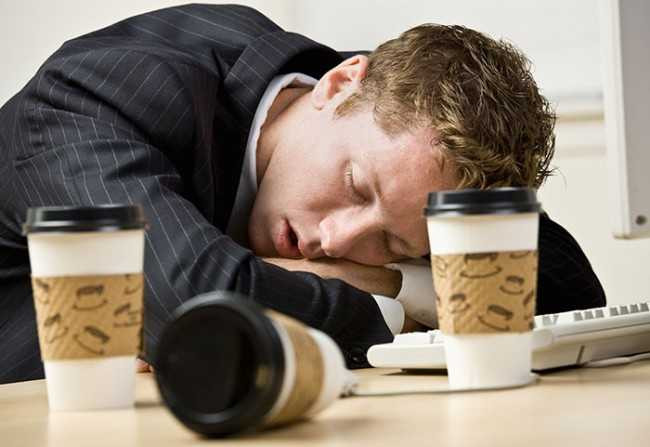
An afternoon coffee feels harmless to most of us — but for sleep, it's often a problem that goes unnoticed. Current research shows that caffeine stays active in the body far longer than most people assume, and it disrupts sleep quality even when falling asleep itself isn't a problem. Here's a look at the science behind it, and at what time your last cup should really be.
How caffeine works in the brain
Caffeine doesn't wake you up directly — it blocks a molecule called adenosine, which builds up in the brain throughout the day and normally drives increasing sleepiness. As long as caffeine occupies the adenosine receptors, adenosine can't do its job. The brain effectively receives a false "not tired" signal, even though the underlying sleep pressure is still building in the background.
Half-life decides — and it's different for everyone
In healthy adults, caffeine's half-life averages around five to six hours. That means an espresso at 3pm still leaves a noticeable amount of active caffeine in your system by 9pm. Individual variation is considerable, ranging from about two to more than ten hours, driven mainly by the liver enzyme CYP1A2, whose activity varies significantly based on genetics. Some people clear caffeine much faster than others, which is why blanket time recommendations can only ever be a rough guide.
Late coffee disrupts sleep more than you'd notice
A frequently cited 2013 study by Drake and colleagues found that even caffeine consumed six hours before bedtime reduced objectively measured sleep time by roughly an hour — without participants noticing it subjectively. A more recent controlled trial, published in 2025 in the journal Sleep, confirms this pattern: caffeine taken six hours before bedtime reduced sleep efficiency by 2.6% and total sleep time by an average of 41 minutes. Even deep sleep is affected — caffeine measurably suppresses so-called delta wave activity, the brain waves responsible for restorative deep sleep, even when consumed six hours before bed. On top of that, a double espresso taken just three hours before bedtime has been shown to delay the release of the sleep hormone melatonin by around 40 minutes.
Rule of thumb: how late is too late?
Based on these findings, sleep researchers recommend having your last cup of coffee — about 100mg of caffeine, roughly one cup of filter coffee — at least nine hours before bedtime. For double that amount, such as a double espresso or two cups, the gap should be extended to around 13 hours. For most people in everyday life, that means the last coffee of the day should be in the early afternoon at the latest — and anyone particularly sensitive to caffeine is well advised to stop even earlier.
The takeaway
Afternoon or evening coffee often affects sleep without you consciously noticing it — falling asleep itself is usually unaffected, but sleep duration and deep sleep quality suffer measurably. If you often sleep poorly despite seemingly falling asleep without trouble, it's worth taking a closer look at your afternoon coffee habits. As always, individual sensitivity to caffeine varies widely — a little self-observation goes a long way.
This article is for general information only and does not replace medical advice.

 Deutsch
 Ελληνικά